God of War: Laufey Has No Kratos and That’s the Whole Bet
Santa Monica Studio's God of War sequel stars Faye — Kratos's dead wife — navigating the afterlife of the Norse gods. Kratos is not in it. That's the entire bet.
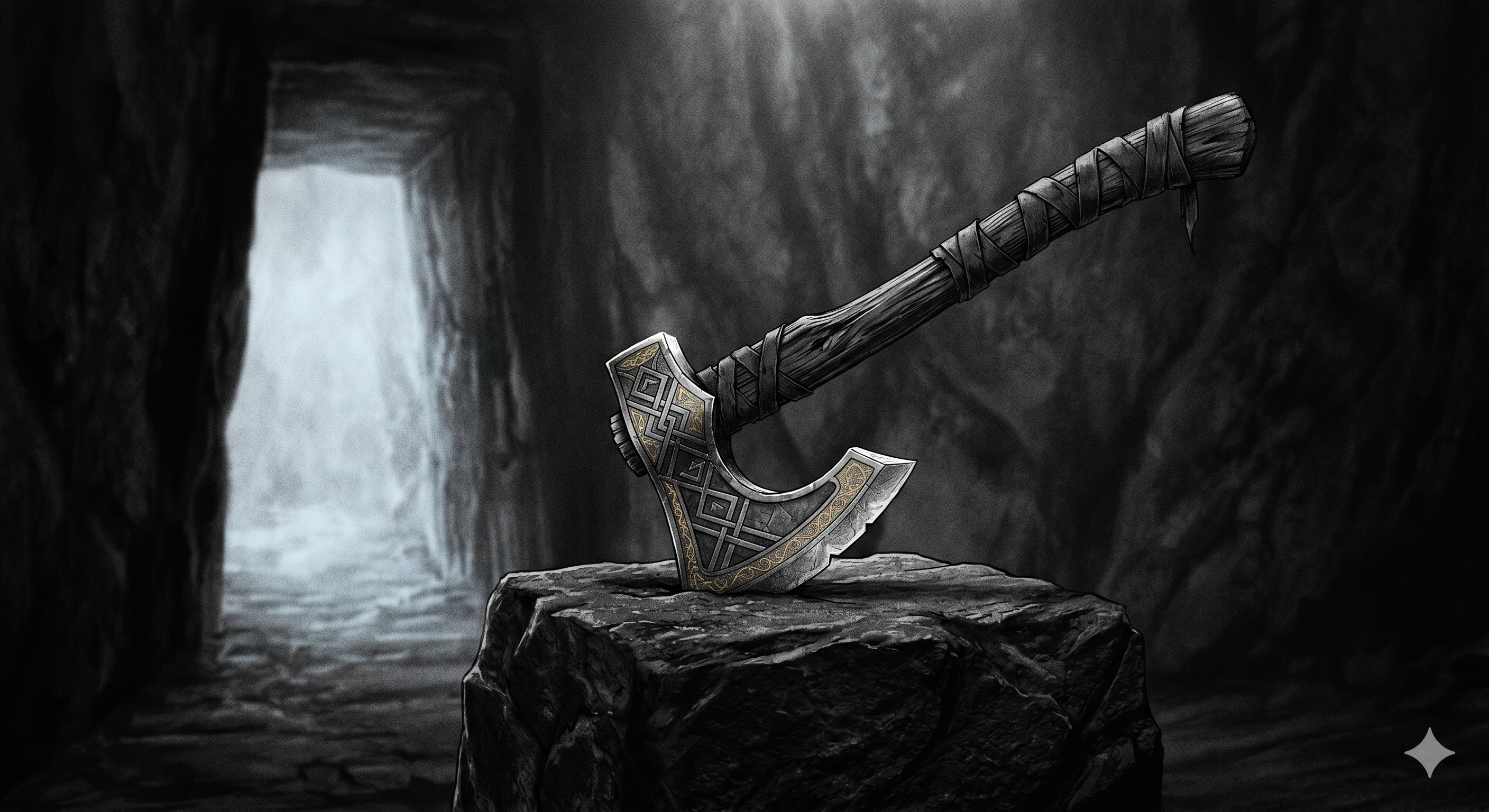
Sony closed PlayStation’s June 2026 State of Play with the reveal of God of War: Laufey — a full sequel from Santa Monica Studio, the same team behind God of War (2018) and Ragnarök — in which Kratos does not appear. The lead is Faye, his deceased wife, moving through the afterlife of the Norse gods. There is also a mysterious cube voiced by Jack Quaid. Santa Monica Studio just staked the franchise on a protagonist nobody has ever played as, in a story set entirely in the mythology surrounding games everyone actually loved.
The announcement came June 2 at the official PlayStation State of Play, a showcase that also confirmed Marvel’s Wolverine for September 15, revealed Until Dawn 2, Control Resonant, and Onimusha: Way of the Sword. In a lineup with that much density, closing the show with God of War: Laufey is a deliberate statement of confidence. GameSpot’s coverage noted the setting (the afterlife of the Norse gods) and the presence of a cube companion voiced by Jack Quaid that appears to serve a core narrative function rather than existing as a gimmick. Santa Monica Studio developed this after Ragnarök, which means the same creative team decided the Norse saga was complete and the best way forward was to go backward, laterally, and into lore the existing games never touched.
The argument for this decision is that Kratos had nowhere left to go that wasn’t repetition. The 2018 game was about a rage-consumed god learning to be a father. Ragnarök was about that same father learning to trust his son and let go. Both arcs resolved. A third game in the same emotional register would be the kind of repetition that turns a franchise into a parody of itself — and Sony’s first-party strategy this year has been unusually willing to take creative risks rather than play it safe. Saros from Housemarque, which I reviewed in Housemarque Topped Themselves, showed what happens when a Sony studio gets to swing at a genuinely different vision. The alternative to Laufey was making Kratos fight a new pantheon for twenty hours while players waited for an emotional beat that already happened.
The Jack Quaid cube is the part of the reveal that genuinely hasn’t resolved yet, in either direction. A companion character defined entirely by its geometric form is either the most interesting design since Atreus or the most transparent attempt to introduce a toy-ready mascot into a franchise that previously worked by taking itself completely seriously. If the cube is a narrative delivery mechanism for Faye’s emotional journey through the underworld, something that forces her to articulate things she couldn’t say when she was alive, it will be the most interesting companion design the franchise has tried. If it’s mostly in the game because a focus group responded well to something unthreatening, it is going to spend a lot of time on mute.
Santa Monica Studio’s bet is that God of War is bigger than Kratos. The franchise has never tested that before.
Die-hard fans are already making the case that this is brand extension posing as creative ambition. Faye’s backstory is compelling as mythology — she is the entire reason the Norse setting exists — but she died before the 2018 game’s narrative began, which means the creative team has to build a full characterization from scratch, against audience expectations formed by a dead character referenced in flashbacks. The franchise’s tone was built entirely around Kratos’s specific violence and grief: the weight of his past, the awkwardness of his redemption, the particular dynamic between a person defined by anger who is trying not to be. That doesn’t automatically transfer to a different protagonist in a different emotional register, no matter how good the studio is.
All of which makes God of War: Laufey the most interesting unknown in Sony’s first-party lineup — and, if it works, potentially the most important. If Santa Monica Studio delivers a game that makes Faye as fully realized as Kratos across a full arc, they prove the franchise can survive without its protagonist. That’s genuinely valuable to establish, especially given Sony’s recent setbacks on expensive first-party swings. If it doesn’t land, the argument that PlayStation’s best studios can always be trusted to swing big on an unusual creative choice just got harder to make with a straight face. The cube better be worth it.
Sources: PlayStation Blog · GameSpot · GamesRadar